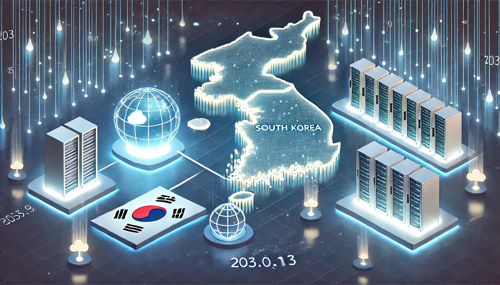
As South Korea’s internet environment and the complexity of cross-border operations increase, the vulnerabilities and compliance requirements related to servers in South Korea are also evolving continuously. “The Training Program to Enhance the Operations Team’s Ability to Address Vulnerabilities in Korean Servers” focuses on establishing a systematic training framework for enterprises, aiming to improve their practical skills in vulnerability detection, rapid repair, and emergency response. This helps to reduce business disruptions and compliance risks.
Analysis South Korean server Current Status and Challenges of Vulnerabilities
Common risks on Korean servers include outdated software versions, configuration errors, vulnerabilities in third-party components, and targeted attacks. Cross-border delays, ISP differences, and CDN configuration issues can amplify the impact. Additionally, local data sovereignty and GEO strategies need to be taken into account. When establishing patching windows and backup plans, operations must balance legal compliance with business availability.
Design of Training Objectives and Competency Matrix
Training objectives should cover vulnerability identification, priority assessment, patch testing and rollback, emergency response, and post-incident review. Break down capabilities into three dimensions: foundational knowledge, practical tool usage, and process execution. Develop a capability matrix for each position to clarify the boundaries of responsibilities and paths for advancement between positions, facilitating quantitative evaluation of performance.
Core Training Modules and Course Content
The course should cover asset inventory, passive and active vulnerability scanning, CVE interpretation, patch management, configuration baselines, and hardening practices. In addition, compliance considerations, logging and forensics plans, as well as Korea-related compliance standards and localization requirements are included to ensure that the training content is both technically sound and meets regional compliance needs.
Hands-on Practice: Red vs. Blue confrontation and tabletop exercises
Test the team’s response capabilities through penetration testing, red-team/blue-team exercises, and tabletop simulations. Simulate attack scenarios targeting applications and networks within South Korea, clarify alarm pathways, communication mechanisms, and responsibility allocation, measure average repair time and recovery time, and continuously improve emergency SOPs and cross-departmental collaboration processes.
Toolchain Development and Automation Practices
Practical tools such as vulnerability management platforms, centralized logging and SIEM, automated patching tools, and container image scanning should be introduced in training. Improve detection speed and repair efficiency through tool-based drills, and teach automated script development and secure CI/CD practices to reduce human errors and enhance repair reliability.
Knowledge Transfer and Continuous Improvement Mechanisms
Establish a knowledge base, standard operating procedures (SOPs), and training review mechanisms, and promote continuous learning through online courses and regular lectures. Establish post-exercise reviews and a case database, and update training content quarterly to address new types of vulnerabilities and attack methods emerging in the Korean server ecosystem, thereby creating a continuous loop for long-term capability improvement.
Evaluation Metrics and Implementation Recommendations
It is recommended to measure the effectiveness of training using KPIs such as Mean Time To Repair (MTTR) for vulnerabilities, patch coverage, recovery time from drills, and the recurrence rate of incidents. During implementation, start by conducting a risk assessment and prioritization, advance courses and drills in phases, and link key metrics to operational performance or goal iteration to ensure that investments yield quantifiable returns.
Summary and Recommendations
Regarding the “Training Program to Improve the Operational Team’s Ability to Address Vulnerabilities in Korean Servers,” it is recommended that companies first assess the risks and compliance requirements related to their business in Korea. They should then develop localized training programs that incorporate practical exercises and automated tools. By defining capability matrices, conducting continuous reviews, and leveraging KPIs, the operations team can quickly identify and effectively address vulnerabilities in Korean servers, thereby ensuring business continuity and compliance.
- Latest articles
- Practical Guide And Advice On Choosing The Most Stable PUBG Server In South Korea
- How Does Cross-border Business Use Cloud Servers? Singapore Servers Improve Access Experience
- How To Enter The Vietnam Server Now? A List Of Graphic Steps And Common Misunderstandings That Even Beginners Can Understand.
- How Does An Enterprise Choose A Hosting Plan That Supports Multiple IPs For US Site Group Servers?
- Looking At The Stability And Compliance Requirements Of Cross-border Transactions From The Futian Hong Kong Station Group Server
- Evaluate The Compliance Certificate And Protection Capabilities Of US Cloud Rental Servers From A Security Perspective
- Purchasing Advice Hong Kong Vps Cloud Server 8 Core How To Choose The Appropriate Package According To Business Load
- Comparative Analysis Of Computer Room Distribution And Network Interconnection Performance Of Server Companies In Taiwan
- Cost Control Billing Model And Money-saving Tips For Taiwan’s Native IP Server Cloud Server
- Cost And Operation And Maintenance Perspective Differences Between Hong Kong Cn2 And BGP Comparison Of Procurement And Maintenance Costs
- Popular tags
-

A Beginner's Guide On How To Buy A Korean Server To Avoid Common Pitfalls And Hidden Fees
The beginner's guide teaches you how to buy a server in Korea, breaking down bandwidth billing, IP and network interconnection, contract terms, and local compliance item by item, helping you avoid common pitfalls and hidden fees, and facilitating SEO and GEO decisions. -
The Reasons And Analysis Behind The Phenomenon Of Participating In The B-site Group Ridicule Of South Korea
This article analyzes the reasons behind the participation of B station group ridicule of South Korea and explores the cultural background and social psychology of this phenomenon. -
How To Deploy Highly Available Korean-native Website Clusters To Implement A Traffic Localization Strategy
Guide: How to deploy highly available Korean-native website clusters to localize traffic, including architecture design, GeoDNS, CDN, load balancing, database synchronization, session management, monitoring, and localization SEO recommendations.